RESEARCH / 2024
Robots with a softer side.
Exploring conversational robotic assistants in ADHD therapy scenarios.
A more human question.
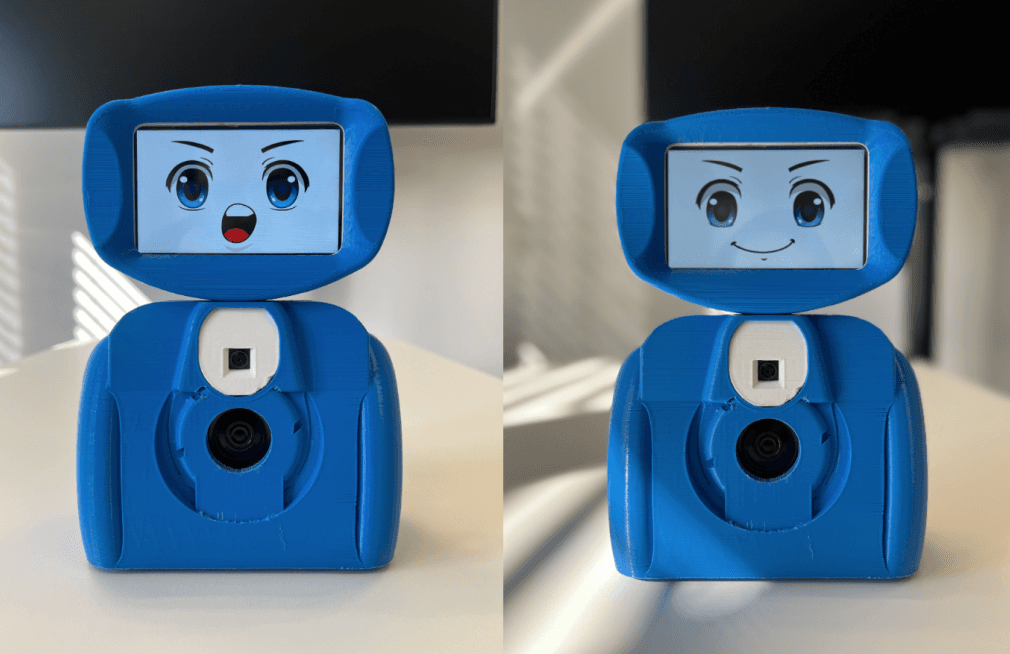
What happens when a physical robotic assistant can hold a more flexible conversation? Our research explored the integration of ChatGPT-4 Turbo and Claude-3 Opus into a robot for simulated ADHD therapy scenarios.
My contribution.
I co-authored the study and contributed to the robot’s hardware and software integration, working with Raspberry Pi and conversational language models.
What the study explored.
We compared the language models with a customized model in simulated therapy interactions. This was exploratory research, rather than evidence of clinical treatment outcomes. The paper was accepted at the 20th International Conference on Intelligent Environments in 2024.
Curious about the details? Let’s talk